
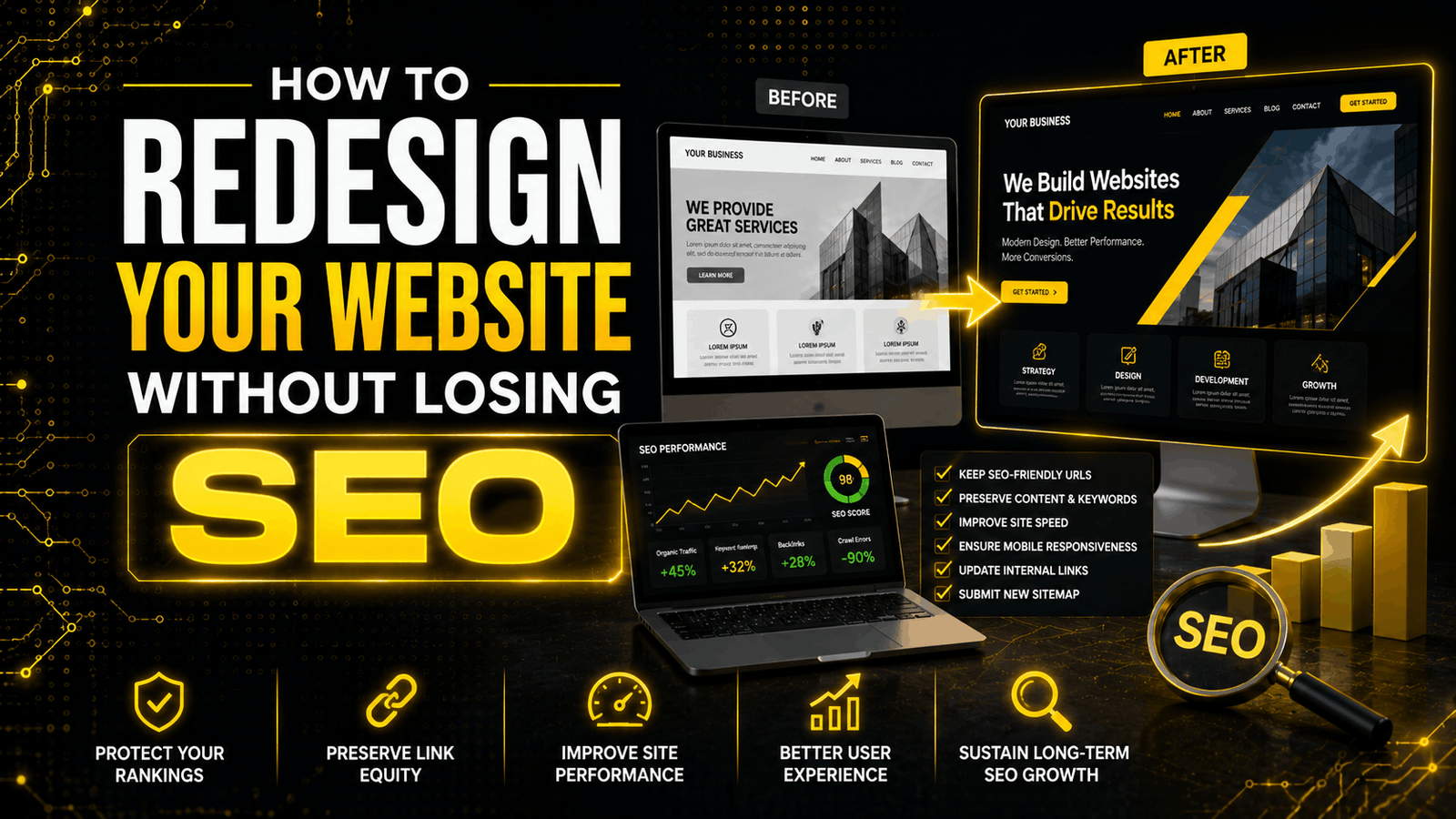
Website redesign can improve user experience, branding, lead generation, and website performance. However, many businesses lose valuable Google rankings and organic traffic during redesign projects because SEO planning is ignored.
In 2026, businesses must redesign websites carefully to protect their SEO performance and maintain search visibility.
A successful website redesign should improve design and functionality without damaging existing rankings, backlinks, or indexed pages.
In this guide, we’ll explain how to redesign your website without losing SEO.
Why Website Redesigns Can Hurt SEO
SEO problems often happen during redesigns because of:
- Broken URLs
- Deleted pages
- Poor redirects
- Lost metadata
- Slow website performance
Without proper planning, rankings and traffic can drop significantly.
1. Audit Your Existing Website Before Redesign
Before redesigning your website, analyze your current SEO performance.
Important areas to review include:
- Top-performing pages
- Ranking keywords
- Traffic sources
- Backlinks
- Indexed pages
2. Keep Important URLs Whenever Possible
Changing URLs unnecessarily can hurt SEO rankings.
Try to preserve existing URLs for important pages.
3. Use Proper 301 Redirects
If URLs must change, use 301 redirects to redirect old pages to new pages.
301 redirects help preserve:
- SEO value
- Backlinks
- Google indexing
- User experience
4. Preserve Existing SEO Metadata
Important SEO elements should be maintained during redesign.
This includes:
- Title tags
- Meta descriptions
- Heading structure
- Image alt text
5. Improve Website Speed During Redesign
Modern websites should load quickly on all devices.
Read our guide on website speed optimization.
6. Maintain Internal Linking Structure
Internal links help search engines understand website structure.
Broken or missing internal links can reduce SEO performance.
Read our guide on internal linking strategy.
7. Make the New Website Mobile-Friendly
Google prioritizes mobile-friendly websites in search rankings.
Responsive design improves:
- User experience
- SEO performance
- Lead generation
Read our guide on responsive website design.
8. Preserve High-Performing Content
Content that already ranks well should not be removed without proper strategy.
Update and improve content instead of deleting valuable pages.
9. Optimize Website Structure
A well-organized website structure improves SEO and usability.
Read our guide on SEO-friendly website structure.
10. Test the Website Before Launch
Before launching the redesigned website, check for:
- Broken links
- Redirect issues
- Mobile responsiveness
- Page speed
- Indexing problems
11. Update XML Sitemap
Submit updated XML sitemaps to Google Search Console after launch.
12. Monitor Google Search Console
After launch, monitor:
- Index coverage
- Crawl errors
- Traffic changes
- Ranking performance
13. Preserve Backlink Value
Backlinks are important for SEO authority.
Redirecting old URLs properly helps preserve backlink value.
14. Avoid Launching Incomplete Websites
Launching unfinished pages can create SEO and user experience problems.
15. Optimize Images Properly
Compressed and optimized images improve speed and SEO performance.
16. Improve User Experience During Redesign
Modern website redesign should improve:
- Navigation
- Readability
- Conversion paths
- Mobile usability
17. Keep SEO-Friendly Content URLs
Keyword-focused URLs should remain optimized and clean.
18. Track SEO Performance After Launch
Businesses should monitor:
- Organic traffic
- Keyword rankings
- Bounce rates
- Lead generation
19. Use Conversion-Focused Design Improvements
Redesign projects should improve:
- Lead generation
- CTA visibility
- Trust indicators
- Customer engagement
20. Work with Experienced Professionals
SEO-friendly redesign requires technical and strategic expertise.
Professional website developers and SEO experts help reduce risks during migration.
Common Website Redesign SEO Mistakes
- Removing important pages
- Ignoring redirects
- Changing URLs unnecessarily
- Launching without testing
- Forgetting metadata
Benefits of SEO-Friendly Website Redesign
A successful redesign can improve:
- User experience
- Website speed
- SEO performance
- Conversions
- Brand image
Need Help Redesigning Your Website?
We help businesses redesign websites while protecting SEO rankings, improving performance, and increasing lead generation.
Explore our website redesign services.
Final Thoughts
Website redesign can significantly improve business growth when planned correctly.
Businesses should focus on SEO preservation, redirects, mobile responsiveness, speed optimization, and user experience during redesign projects.
A strategic redesign helps businesses modernize their online presence without losing valuable Google rankings.
Contact us today for an SEO-friendly website redesign!