

A well-structured website is essential for both search engines and users. In 2026, website structure plays a major role in SEO rankings, user experience, and lead generation.
An SEO-friendly website structure helps search engines crawl your website efficiently while making it easier for visitors to find information.
In this guide, we’ll explain how to create an SEO-friendly website structure for better rankings and performance.
What is Website Structure?
Website structure refers to how your pages, categories, and content are organized and connected.
A good structure creates a clear hierarchy that helps both users and search engines navigate your website.
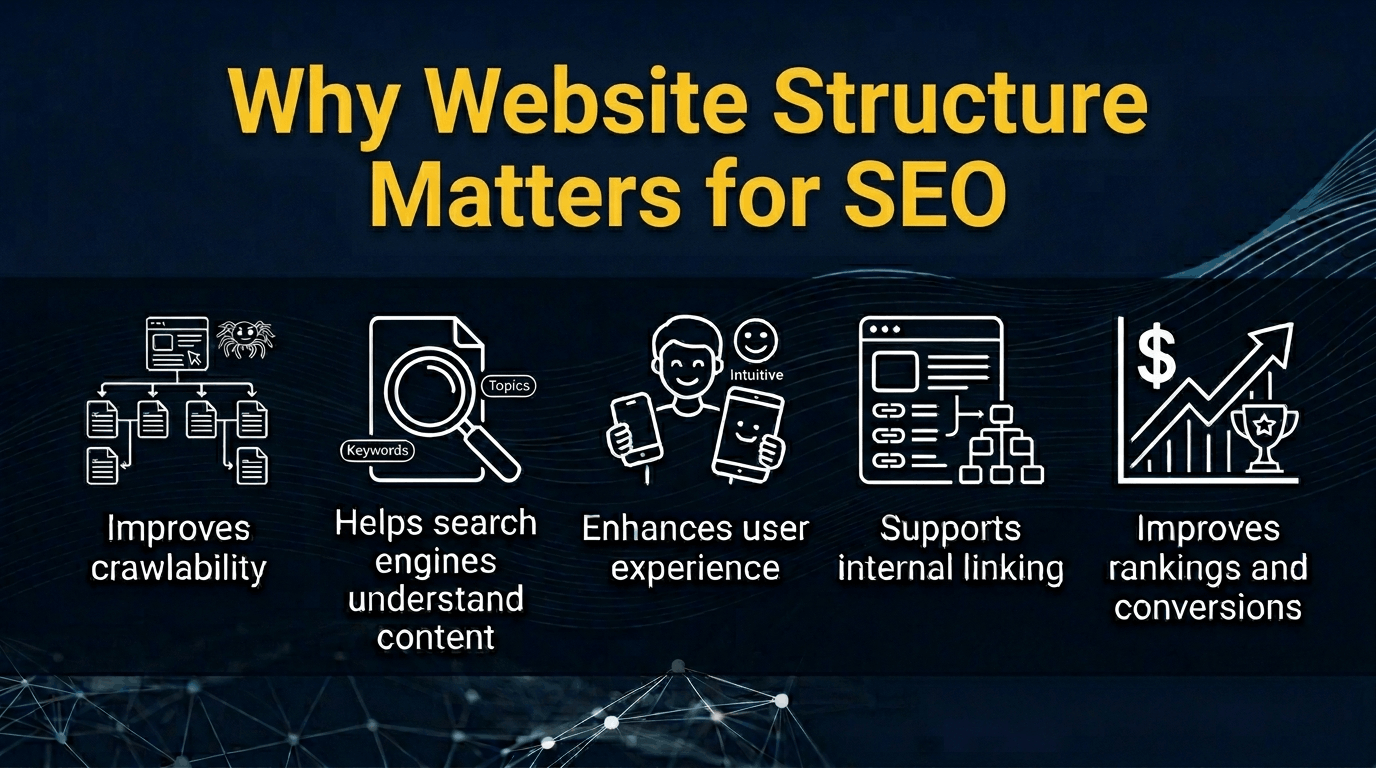
Why Website Structure Matters for SEO
- Improves crawlability
- Helps search engines understand content
- Enhances user experience
- Supports internal linking
- Improves rankings and conversions
1. Start with a Clear Website Hierarchy
Your website should have a logical hierarchy.
Basic structure example:
- Homepage
- Service Pages
- Blog Categories
- Individual Blog Posts
- Contact Page
Users should reach important pages within a few clicks.
2. Use Simple and SEO-Friendly URLs
URLs should be short, readable, and keyword-focused.
Good example:
example.com/website-speed-guide
Bad example:
example.com/page?id=123
3. Create Strong Internal Linking
Internal links help connect related pages and distribute SEO authority.
- Link related blog posts
- Connect service pages
- Use contextual anchor text
Read our guide on internal linking strategy.
4. Organize Content into Categories
Grouping content into categories improves navigation and SEO.
Example categories:
- SEO
- Website Design
- WordPress
- Digital Marketing
5. Keep Navigation Simple
Clear navigation improves usability and crawlability.
- Simple menus
- Logical page order
- Mobile-friendly navigation
6. Optimize for Mobile Users
Google uses mobile-first indexing, so mobile usability is critical.
- Responsive design
- Touch-friendly menus
- Fast mobile loading
Read our guide on why mobile-friendly website design matters.
7. Improve Website Speed
Fast-loading websites improve both SEO and user experience.
- Compress images
- Optimize scripts
- Use quality hosting
Read our guide on how to improve website speed.
8. Use Breadcrumb Navigation
Breadcrumbs help users and search engines understand page hierarchy.
Example:
Home → Blog → SEO → SEO-Friendly Website Structure
9. Create SEO-Friendly Page Structure
Every page should use proper headings and content hierarchy.
- One H1 heading
- Organized H2 and H3 headings
- Clear content sections
10. Avoid Orphan Pages
Orphan pages are pages without internal links pointing to them.
These pages are harder for search engines to discover and rank.
11. Use XML Sitemaps
Sitemaps help search engines discover important pages.
- Submit sitemap to Google Search Console
- Keep sitemap updated
12. Focus on User Experience (UX)
SEO-friendly structures should also improve user experience.
- Easy navigation
- Clear page layouts
- Fast loading speed
- Readable content
Common Website Structure Mistakes
- Complex navigation
- Too many categories
- Broken internal links
- Poor mobile usability
- Unorganized URLs
Need Help Optimizing Your Website Structure?
We create SEO-friendly websites designed for better rankings, user experience, and conversions.
Explore our website development services.
Improve rankings with our SEO services.
Final Thoughts
An SEO-friendly website structure is essential for online success in 2026.
Good structure improves crawlability, user experience, and search engine rankings while helping visitors find information more easily.
Even small structural improvements can have a major impact on long-term SEO performance.
Contact us today to improve your website SEO and structure!