
Choosing the right website design is one of the most important decisions for any business in 2026. Your website represents your brand online and directly affects customer trust, user experience, SEO, and conversions.
A professional website design helps businesses attract visitors, generate leads, and improve online credibility.
However, different businesses require different website styles depending on their industry, target audience, goals, and services.
In this guide, we’ll explain how to choose the right website design for your business in 2026.
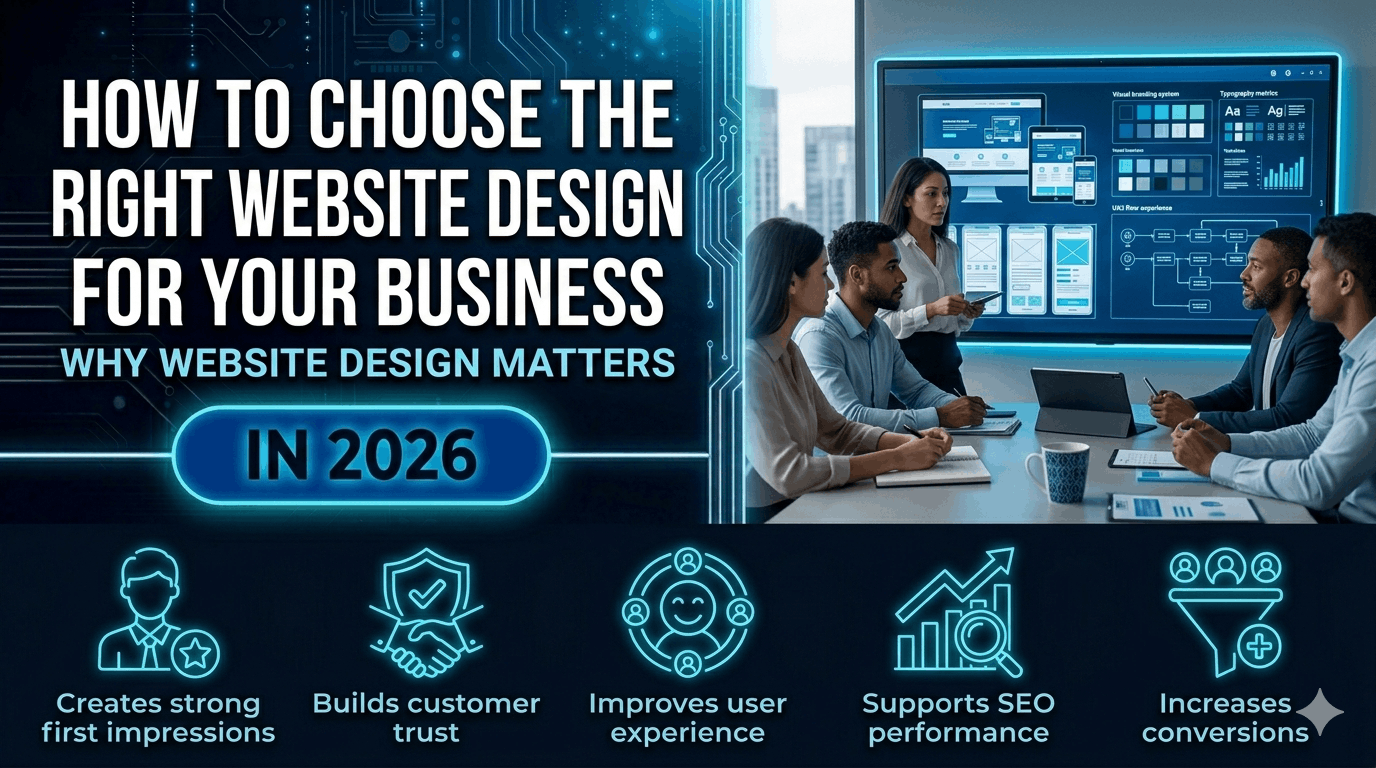
Why Website Design Matters
- Creates strong first impressions
- Builds customer trust
- Improves user experience
- Supports SEO performance
- Increases conversions
1. Understand Your Business Goals
Before choosing a website design, clearly define your business goals.
Ask yourself:
- Do you want more leads?
- Do you want online sales?
- Do you want brand awareness?
- Do you want customer enquiries?
Your goals should influence your website structure and design style.
2. Know Your Target Audience
Your website should match the expectations of your target customers.
Different audiences prefer different styles:
- Corporate clients → Professional layouts
- Creative audiences → Modern visual design
- Local customers → Simple and informative websites
3. Choose a Layout That Fits Your Business
Website layout selection depends on your services and content requirements.
Popular layouts include:
- Single page websites
- Multi page websites
- Landing pages
- Portfolio layouts
Read our guide on single page vs multi page websites.
4. Focus on Mobile-Friendly Design
Mobile responsiveness is essential in 2026.
Your website should work smoothly on:
- Smartphones
- Tablets
- Desktop screens
Read our guide on responsive website design.
5. Prioritize User Experience (UX)
Good website design should make navigation simple and intuitive.
Important UX elements include:
- Clear navigation
- Fast loading speed
- Readable typography
- Simple layouts
6. Match Design with Brand Identity
Your website design should reflect your brand personality.
Branding elements include:
- Logo
- Colors
- Typography
- Visual style
Read our guide on website color combinations.
7. Choose SEO-Friendly Website Design
Modern websites should support SEO best practices.
SEO-friendly design includes:
- Fast loading pages
- Clear site structure
- Mobile optimization
- Internal linking
Read our guide on SEO-friendly website structure.
8. Use Clear Call-to-Actions (CTAs)
Your website should guide visitors toward important actions.
Examples include:
- Get a Quote
- Book Consultation
- Contact Us
- Start Now
9. Choose the Right Visual Style
Modern websites in 2026 often use:
- Minimalist layouts
- Clean typography
- Professional imagery
- Subtle animations
Overly cluttered designs often reduce trust and usability.
10. Focus on Website Speed
Fast-loading websites improve user experience and SEO performance.
Read our guide on website speed optimization.
11. Include Trust-Building Elements
Trust indicators improve credibility and conversions.
Examples include:
- Testimonials
- Client logos
- Case studies
- SSL security
12. Select the Right Website Platform
Different platforms suit different business needs.
Popular options include:
- WordPress
- Shopify
- Custom development
Read our guide on best website platforms.
13. Plan for Future Growth
Your website design should support future expansion.
Businesses often add:
- New services
- Blog sections
- eCommerce features
- Booking systems
14. Avoid Outdated Design Trends
Outdated websites can reduce customer trust.
Read our guide on outdated website design mistakes.
15. Consider AI and Modern Features
Modern websites increasingly use:
- AI chatbots
- Personalized content
- Smart automation
- Interactive experiences
Read our guide on AI in website design.
Common Website Design Mistakes
- Cluttered layouts
- Poor navigation
- Slow loading speed
- Weak mobile experience
- Confusing CTAs
How the Right Website Design Helps Businesses Grow
Professional website design improves:
- Brand credibility
- User engagement
- SEO rankings
- Lead generation
- Conversions
Need Help Designing the Perfect Business Website?
We help businesses create modern, responsive, SEO-friendly, and conversion-focused websites tailored to their business goals and audience.
Explore our website development services.
Final Thoughts
Choosing the right website design is essential for business success in 2026.
Businesses should focus on user experience, branding, SEO, mobile responsiveness, and conversion optimization when selecting website designs.
A modern and strategic website design helps businesses create stronger online presence and better customer engagement.
Contact us today to build the perfect website for your business!