

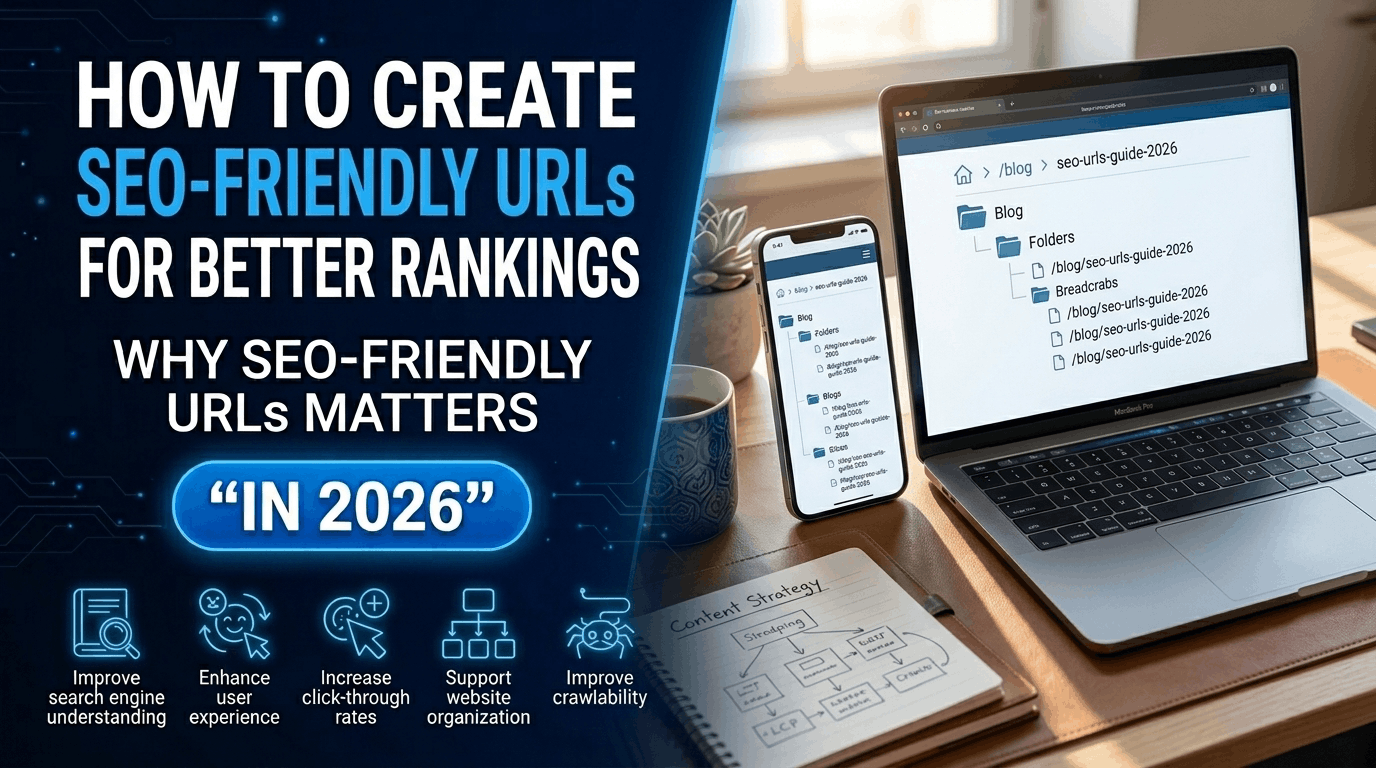
URLs are an important part of website SEO. A clean and organized URL structure helps search engines understand your content while improving user experience.
In 2026, SEO-friendly URLs continue to play an important role in website rankings, crawlability, and content organization.
In this guide, we’ll explain how to create SEO-friendly URLs for better website performance.
What is an SEO-Friendly URL?
An SEO-friendly URL is a clean, readable, and descriptive web address that helps users and search engines understand page content.
Example of a good URL:
example.com/seo-friendly-urls
Example of a poor URL:
example.com/page?id=12345
Why SEO-Friendly URLs Matter
- Improve search engine understanding
- Enhance user experience
- Increase click-through rates
- Support website organization
- Improve crawlability
1. Keep URLs Short and Simple
Short URLs are easier to read and share.
Avoid unnecessary words, numbers, and complex structures.
Good example:
example.com/website-speed-guide
2. Include Target Keywords
Adding relevant keywords helps search engines understand page topics.
Use keywords naturally without stuffing.
Example:
example.com/technical-seo-checklist
3. Use Hyphens Instead of Underscores
Search engines recommend hyphens for separating words.
Good:
seo-friendly-urls
Avoid:
seo_friendly_urls
4. Avoid Special Characters
Clean URLs are easier for users and search engines to understand.
Avoid:
- Special symbols
- Random numbers
- Unnecessary parameters
5. Make URLs Readable
Users should quickly understand page content from the URL itself.
Readable URLs improve trust and click-through rates.
6. Use Lowercase Letters
Lowercase URLs reduce duplicate content issues and improve consistency.
Example:
example.com/seo-guide
7. Avoid Keyword Stuffing
Overusing keywords in URLs can look spammy.
Avoid URLs like:
example.com/best-seo-services-seo-company-seo-guide
8. Maintain Logical Website Structure
Organized URL structures improve navigation and SEO.
Example:
example.com/blog/seo-friendly-urls
Read our guide on SEO-friendly website structure.
9. Avoid Changing URLs Frequently
Changing URLs can affect rankings and create broken links.
If URL changes are necessary, use proper 301 redirects.
10. Optimize URLs for Mobile Users
Clean URLs improve usability on mobile devices and social sharing.
Shorter URLs are easier to read on smaller screens.
11. Improve Crawlability
Search engines crawl clean URLs more efficiently.
- Use simple structures
- Avoid unnecessary folders
- Reduce duplicate pages
12. Use Canonical URLs Properly
Canonical tags help prevent duplicate content problems.
This is especially important for eCommerce and large websites.
13. Support Internal Linking Strategy
Clean URLs improve internal linking readability.
Read our guide on internal linking strategy.
14. Monitor URL Performance
Regular SEO audits help identify URL issues.
- Check broken links
- Monitor crawl errors
- Analyze indexing issues
Common URL Mistakes
- Long complicated URLs
- Keyword stuffing
- Using special characters
- Random numbers and parameters
- Frequent URL changes
How SEO-Friendly URLs Help Rankings
Well-structured URLs improve:
- Search engine understanding
- User trust
- Click-through rates
- Website crawlability
Explore our SEO services.
Need Help Improving Your Website SEO?
We help businesses create SEO-friendly websites designed for better rankings, speed, and user experience.
Explore our website development services.
Final Thoughts
SEO-friendly URLs remain an important part of website optimization in 2026.
Simple, readable, and organized URLs improve both SEO and user experience.
Businesses that maintain clean URL structures often achieve better rankings and stronger website organization.
Contact us today to improve your website SEO structure!