
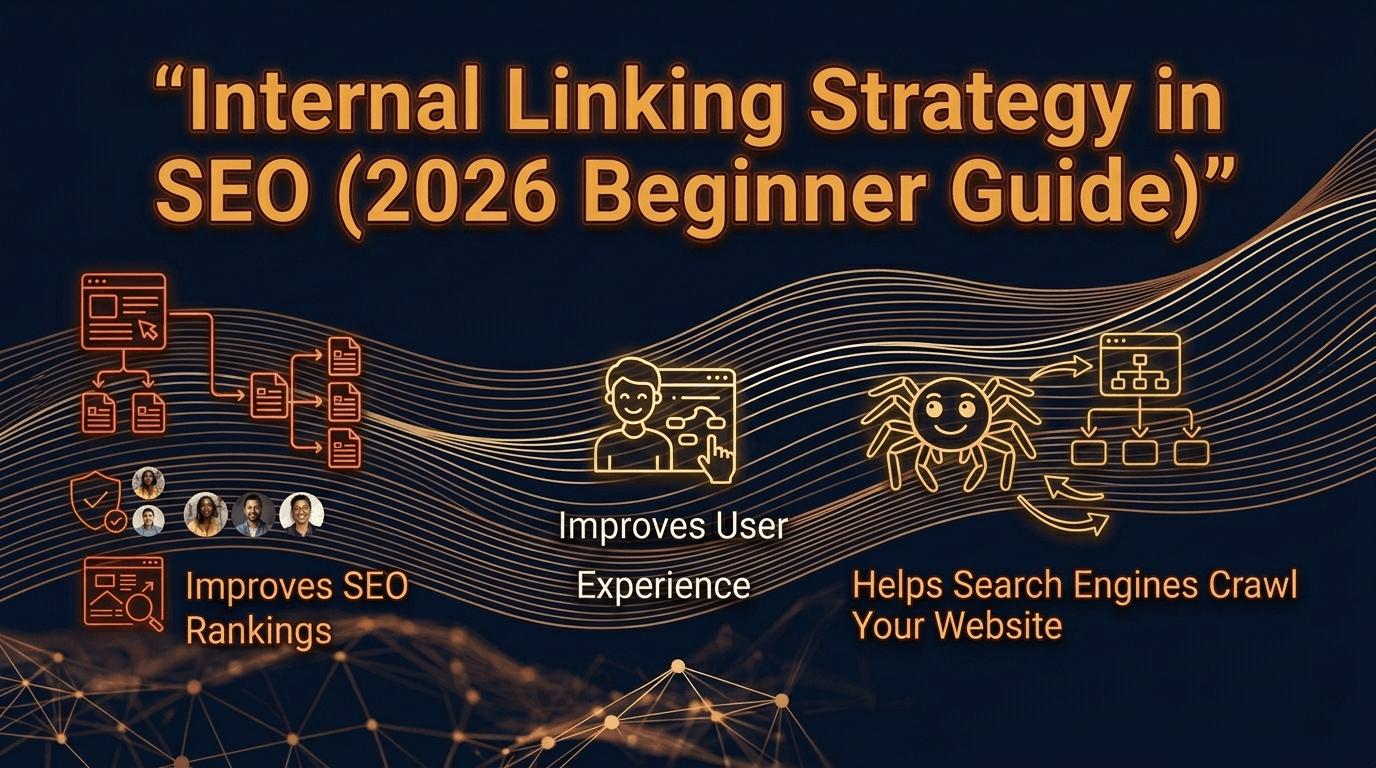
Internal linking is one of the most important SEO techniques for improving website rankings, user experience, and website structure.
Many website owners focus only on backlinks and forget that proper internal linking can significantly improve SEO performance.
In this guide, we’ll explain what internal linking is, why it matters, and how to create an effective internal linking strategy in 2026.
What is Internal Linking?
Internal links are links that connect one page of your website to another page on the same website.
For example:
- Linking a blog post to a service page
- Connecting related blog articles
- Adding navigation links between important pages
Unlike external backlinks, internal links are fully under your control.
Why Internal Linking is Important
1. Improves SEO Rankings
Internal links help search engines understand your website structure and page importance.
- Distributes SEO authority
- Helps pages get indexed faster
- Improves keyword relevance
2. Improves User Experience
Good internal linking helps visitors discover more useful content.
- Increases page views
- Reduces bounce rate
- Improves website navigation
3. Helps Search Engines Crawl Your Website
Search engine bots use internal links to discover and index pages.
Pages with poor internal linking may not perform well in search results.
Types of Internal Links
Navigation Links
Menu links that help users move around your website.
Contextual Links
Links added naturally inside blog posts or page content.
Footer Links
Links placed in the website footer for important pages.
Sidebar Links
Links to related posts or services.
How to Create an Effective Internal Linking Strategy
1. Link Related Content
Always connect pages that are relevant to each other.
Example:
- Website speed blog → SEO services page
- Business blogging article → content marketing page
- Homepage design guide → website redesign page
2. Use Descriptive Anchor Text
Anchor text is the clickable text used for links.
Good example:
Read our guide on website speed optimization.
Avoid generic anchor text like:
- Click here
- Read more
- Visit page
3. Prioritize Important Pages
Link more frequently to pages that matter most for your business.
- Service pages
- Contact page
- High-converting landing pages
Explore our website development services.
4. Create Topic Clusters
Group related content around one main topic.
Example:
- Main SEO page
- SEO blog posts
- Website speed guides
- Content marketing articles
5. Avoid Overlinking
Too many internal links can confuse users and reduce SEO value.
Focus on quality and relevance instead of quantity.
Internal Linking Best Practices in 2026
- Use natural contextual links
- Keep website structure organized
- Update old blog posts with new links
- Use mobile-friendly navigation
- Fix broken internal links
Common Internal Linking Mistakes
- Using irrelevant links
- Broken internal links
- Too many links on one page
- Poor anchor text usage
- Ignoring orphan pages
Internal Linking and SEO
Strong internal linking helps:
- Improve crawlability
- Increase ranking potential
- Improve user engagement
- Support content strategy
Explore our SEO services.
Need Help Improving Your Website SEO?
We help businesses improve website structure, SEO performance, and user experience through professional optimization strategies.
Explore our website development services.
Final Thoughts
Internal linking remains one of the most powerful on-page SEO techniques in 2026.
A strong internal linking strategy improves rankings, user experience, and overall website performance.
Even small improvements in internal linking can make a noticeable difference over time.
Contact us today to improve your website SEO strategy!